Problem Overview
Wash bays create a lot of water vapor and airborne droplets. If that moisture isn’t removed and replaced with drier air, it causes prolonged surface wetness, condensation on equipment, higher humidity, corrosion and unsafe floors. The right approach balances exhaust (remove wet air) with controlled intake (bring fresh air) while minimizing energy loss.
Design goals
- Rapid removal of humid air at the source
- Makeup air that doesn’t reintroduce contaminants
- Reduce condensation on walls/fixtures
- Energy efficiency and simplicity
Quick Comparison
| Feature | Intake Louver + Exhaust Fan | Keep The Heat® Air Exchanger |
|---|---|---|
| How it works | Exhaust removes wet air; louvers/intake bring makeup outside air. | Exchanges heat between incoming and outgoing air so fresh air is conditioned without mixing streams. |
| Energy use | Simple but can be high in winter/summer when outside air must be heated/cooled. | Significantly lower heating/cooling load due to heat recovery. |
| Cost | Lower upfront; moderate operating cost. | Higher upfront; lower operating cost over time. |
| Maintenance | Fans, louvers, filters—straightforward. | Core/heat-exchanger maintenance plus fans/controls—moderate. |
| Ideal when | Budget-constrained, mild climate, or simple installations. | High humidity control, energy-sensitive sites, extreme climates. |
Solution A — Intake Louver + Exhaust Fan
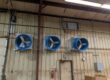
Simple and effective: an exhaust fan pulls the wet, humid air out of the wash bay while an intake louver (or dedicated makeup unit) brings in outside air to replace it. Proper placement and balancing are critical so you don’t create dead zones or draw contaminated air from adjacent spaces.
Key components
- Exhaust fan sized for the bay’s cubic footage and turnover requirements (CFM)
- Intake louver with damper or motorized makeup air to control volume
- Simple filters and insect screens
- Dampers and controls for automated operation
Benefits
- Lower capital cost and fast installation
- Simple to operate and maintain
- Effective at removing source moisture when properly balanced
Considerations & tips
- Cold climates: unconditioned makeup air will increase heating load and can cool surfaces, causing condensation. Consider pre-heating or intermittent operation.
- Use adjustable dampers and variable-speed fans for better control and energy savings.
- Place intake away from contamination sources (vehicle exhaust, overhead doors).
Solution B — Keep The Heat® Air Exchanger
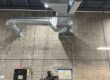
Keep The Heat® style air exchangers (heat recovery ventilators / energy recovery ventilators) transfer heat between the outgoing wet air and incoming fresh air without mixing the two streams. This keeps the incoming air closer to building temperature and reduces energy lost to ventilation.
Key components
- Heat-exchange core that transfers energy between exhaust and intake
- Fans for supply and exhaust
- No filters, no maintenance
- Simple yet effective
- Put on a timer for effective use after hours
Benefits
- Major energy savings — incoming air is pre-warmed or pre-cooled using outgoing air
- Better humidity control and reduced condensation risk
- Improved occupant comfort and faster drying times
Considerations & tips
- Higher initial investment but strong payback in cold/hot climates or high-use wash bays.
- Regularly clean/change filters and inspect the core for blocking from oil/mist.
- Ensure the unit has an anti-icing strategy if used in freezing conditions (preheat, bypass, or defrost cycle).
How to choose between them
- Start with climate: in mild climates a simple intake + exhaust often works fine; in extreme climates, such as northern winter months, a heat exchanger saves energy.
- Estimate run-hours and energy costs: the more hours per year the system runs, the quicker the payback on an exchanger.
- Consider maintenance capacity: Intake louvers will need cleaned periodically
- Think about humidity targets: if you must keep surfaces dry for safety or corrosion reasons, heat recovery helps maintain a drier environment.
Want help?
Tell us bay dimensions, typical vehicles (or parts) washed, local climate (winter design temp), and how many hours per day you run the wash bay. We’ll recommend balanced CFM, controls, and whether a Keep The Heat® exchanger is right for you.